A reliable Telnet and SSH client platform
PuTTY is a free-to-use, open-source, and easy-to-use terminal application. Developers use this SSH client to connect a Windows computer to a Linux system. With multiple customisation options, PuTTY for Windows lets you configure different settings to suit your preferences. However, the configuration options can be difficult to manage, especially for beginners. With PuTTY, you can initiate safe file transfers via SFTP, SCP, telnet, SSH, and rlogin. Moreover, PuTTY is an excellent choice for creating a secure SSH tunnel handling X11 web traffic.
Cross-platform support for Windows and Linux
PuTTY for Windows is a terminal application to connect machines running different operating systems. For instance, with this program, you can connect a Windows PC to a Linux system. In an easy-to-use window, you can type anything on one machine, while it gets reflected on the other almost instantly. In simple terms, PuTTY download gives you access to a remote console to take over another computer.
Is PuTTY easy to use?
PuTTY comes with an easy-to-use interface. While the configuration options can be confusing for beginners, the program has a simple panel. You can conveniently customise and manage sessions and connections in the terminal window. Additionally, you can choose from different connection types, including SSH, rlogin, raw, telnet, SFTP, etc. This lets you set up logging options for specific sessions accordingly.
How to use PuTTY?
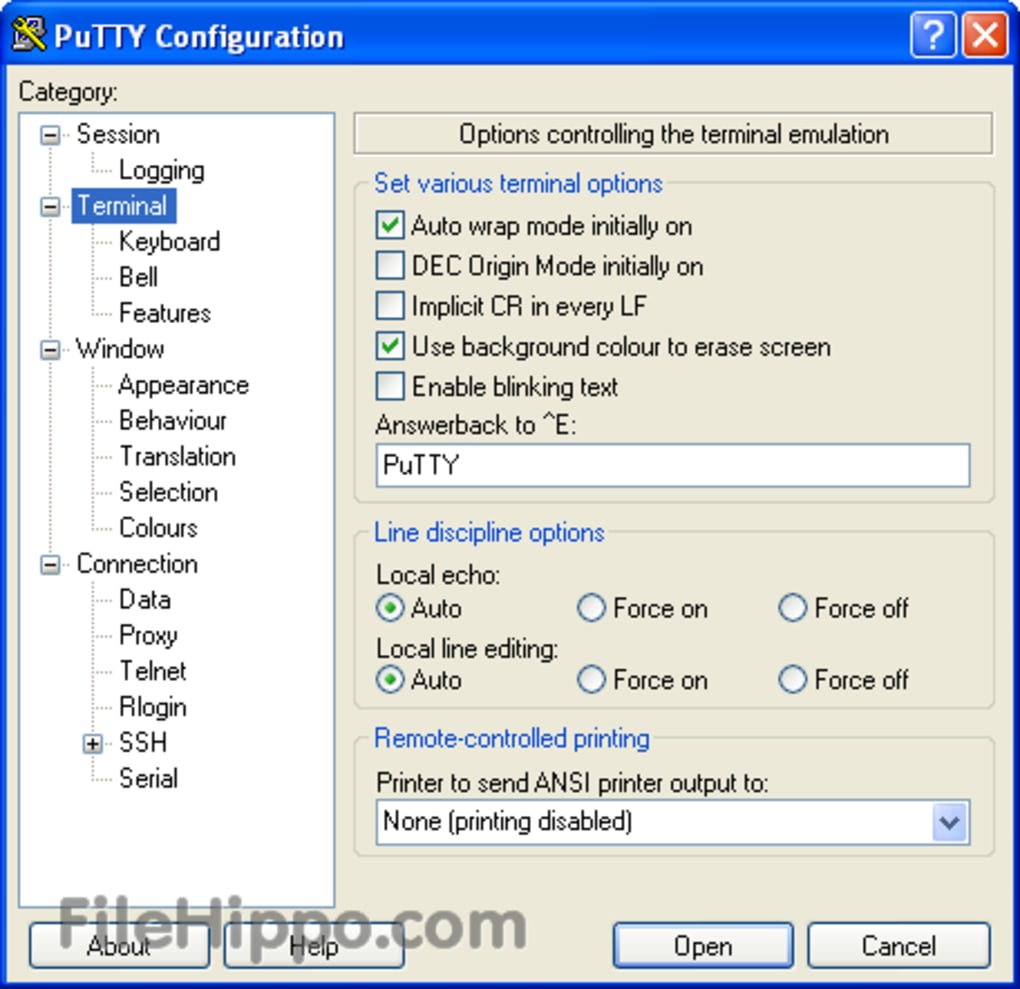
From the terminal section, you can access general settings, remote-controlled printing, line discipline, and other features. Among various SSH clients available for Windows, PuTTY comes with the most comprehensive feature set. With this program, you can execute keyboard actions, set alarms, tweak colours and appearance of the main window, and perform other functions.
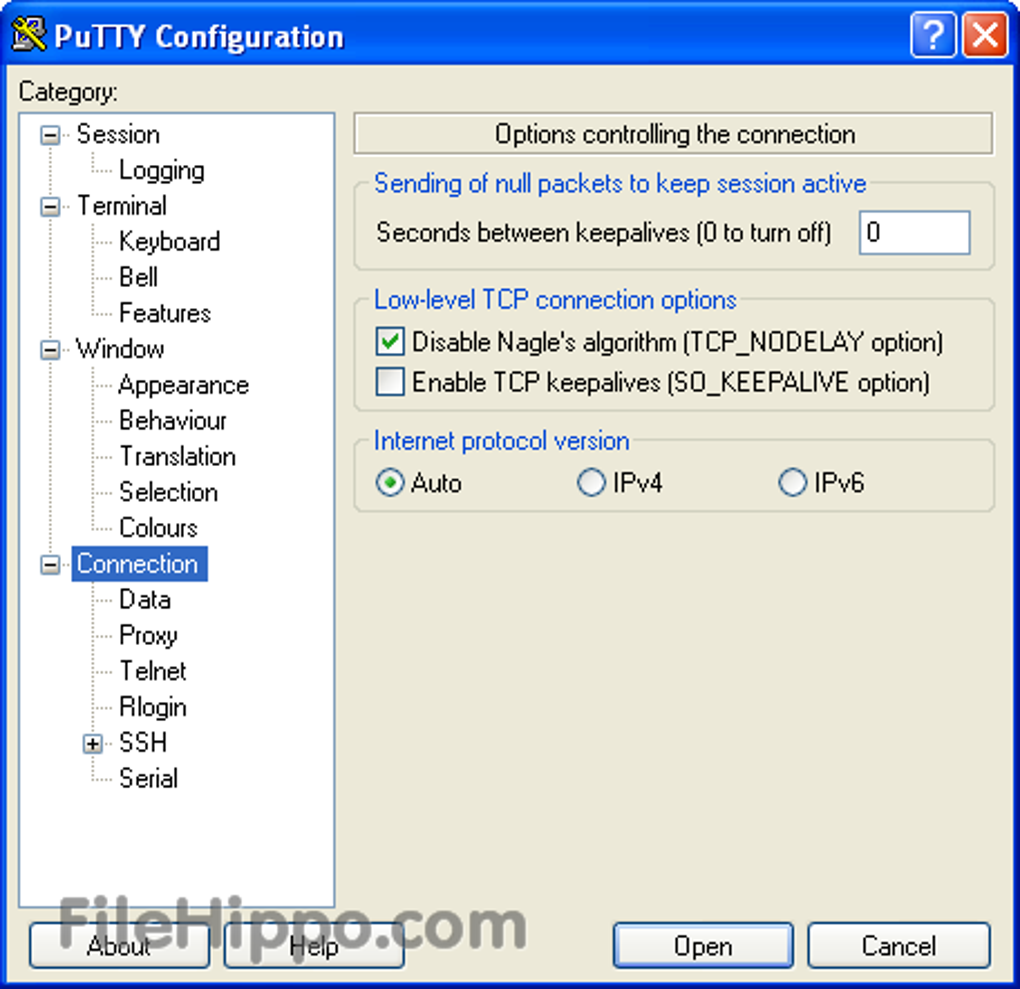
There’s a dedicated ‘connections’ area, which provides you with multiple customisation options for Login Details, Low-level TCP connections, Internet Protocol Version, Terminal Details, Environment Variables, and other adjustments.
After setting up the connection using PuTTY, you can remotely use the other computer’s resources within seconds. As such, this app is an excellent tool for IT professionals, developers, and network engineers, who need to connect to multiple machines remotely on a daily basis.
It’s worth mentioning that PuTTY stores the host PC’s settings. This ensures fast and accurate switches between machines. Moreover, in order to securely transfer data or files over networks, the program uses multiple encryption algorithms, including Blowfish, DES, Arcfour, 3DES, and AES.
With PuTTY, you can easily take control of machines via SSH encryption keys. Additionally, you can access the other computer through the command-line interface, use SCP and SFTP clients, and perform other similar tasks. PuTTY supports local, remote, dynamic, and X11 port forwarding. It also works with IPV6 authentication and protocol using public keys.
Where can you run PuTTY?
Developed by Simon Tatham, the latest version of PuTTY has been designed for multiple operating systems. While the program was originally developed for Windows computers, you can use it on Windows Mobile, Symbian, Windows Phone, and more. Official ports are also available for Unix-like machines. Recently, the application was released for macOS. You can also use the fork form versions of the program, such as KiTTY, which prove to be a good choice.
Developers around the world use terminal applications to connect to operating systems remotely. If you’re a network engineer, system administrator, or developer, PuTTY for Windows will prove to be a great choice. While the program doesn’t have support for a scripting language, it comes with powerful features, multiple configuration options, cross-platform support, and other benefits.
The perfect choice for developers
PuTTY download is a great choice. If you’re looking for a terminal application, PuTTY is a useful app for setting up a connection between a Windows computer and a Linux system. This software is useful for connecting to routers, switches, and mainframes. It uses SSH, serial, and telnet connections effectively. For developers working with X11 networks, PuTTY is an ideal choice to tunnel the sessions with SSH. This protects the data being transferred over the network.
PuTTY is a good tool for developers looking to build basic connections. The program comes with a wide range of features allowing IT professionals to securely connect Windows PCs to Linux systems. The cross-platform support ensures you don’t need to use multiple terminal applications for the task. Having said that, if you have more demanding needs, such as scripting language, additional protocols, etc., you could consider MobaXterm, ConEmu, or WinSCP.